
 ·
4 minute read
·
4 minute read
/Comms%20Blog/Vom%20Produkt%20zur%20Information.jpg?width=650&height=488&name=Vom%20Produkt%20zur%20Information.jpg)
The Digital Product Passport (DPP) marks the beginning of a new order for product information: digital, interoperable, and globally effective. Its significance goes far beyond compliance. It signals a structural shift in how economies operate, how transparency is created, and how technology evolves.
The origin: an intangible value chain
Long before the term “Digital Product Passport” appeared in European legislation, a different idea had already taken shape: alongside the physical value chain, an intangible one would emerge – equally important and complementary in function. This digital layer captures information not visible by the product itself.
A simple example makes this clearer. Neither a steak on a plate nor a glass of wine reveals the conditions under which it was produced. The meat says nothing about the animal’s living conditions – whether it came from responsible farming or intensive industrial production. The wine offers no insight into whether the grapes were harvested by a family business or under exploitative labour conditions.
The original motivation was to close this information gap by making the full story of a product accessible, enabling consumers to make informed, independent decisions.
This idea is also reflected in the company name, Narra Vero – “to tell the true story.”
ESPR as the trigger of an irreversible shift
When the first draft of the Ecodesign for Sustainable Products Regulation (ESPR) was published in March 2022 – at just 122 pages – it was already clear that it would initiate an irreversible process with far-reaching implications beyond its stated objectives.
At its core, the ESPR drives two fundamental changes:
Effect 1: The “real” digitalisation of product information
The ESPR forces a genuine digital transformation of product information.
In this context “genuine” means moving far beyond internal systems such as Product Information Management (PIM), far beyond Product Lifecycle Management (PLM), and beyond isolated solutions built from the perspective of a single company.
The underlying shift is conceptual. Product information becomes an independent asset. It exists across contexts, serves multiple stakeholders and performs different functions depending on where and how it is used. Two major impacts: streamlined B2G processes reducing the burden and cost bureaucracy and streamlined B2B information flow across the value-chain.
This independence creates significant value: more efficient processes, leaner organisational structures, interoperable data ecosystems, and – critically – the foundation for artificial intelligence.
AI systems depend on large volumes of structured data to learn effectively. Without it, they cannot interpret unstructured data or generate meaningful outputs. The DPP contributes directly to building this data layer.
Effect 2: From meaningless QR codes to trusted access to product information
Users have had little reason to scan QR codes on products. As a result, scanning never became a consistent engagement and is now widely ignored. The underlying reason is straightforward: QR codes rarely provided consistent or meaningful value. Often, they led to pure promotional content, generic or expired landing pages or irrelevant experiences.
Consequently, QR codes lost their function as a reliable and convenient access point to relevant product information. They were visible, but not meaningful.
The Digital Product Passport introduces a fundamental shift.
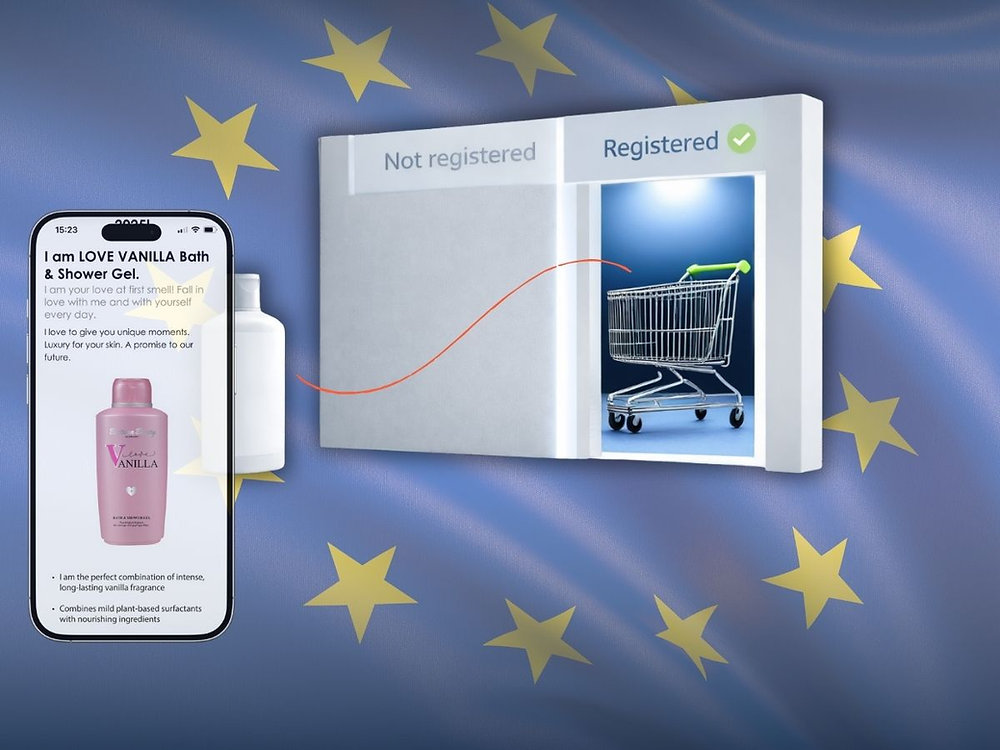
Regulation defines a standardised access point for mandatory product information. With consistent visual marking, it becomes easy to recognise and understand its purpose.
At the same time, the DPP shapes what users can expect from this interaction. It deliberately combines:
-
mandatory, standardised information making product comparison easy and building trust
-
additional, value-adding content that provides context, services and differentiation
Over time, this combination will gradually reshape user behavior. Users will begin to associate the QR code with a clear and reliable expectation: that it provides relevant, trustworthy value.
This underlying logic is not new. It reflects a balance that already exists in mature product communication. For instance, food packaging has long operated within this tension:
-
structured, comparable information on ingredients, nutritional values and allergens
-
alongside branding, storytelling and differentiation
Neither dimension works in isolation. Information creates trust, but not engagement. Communication creates relevance, but not comparability.
The DPP transfers this balance into the digital domain. It turns the QR code (or NFC tag) into a reliable and meaningful interaction point - one that consistently combines obligation with utility, and gradually restores a clear and reliable reason to engage.
The end of printed manuals
One simple consequence and benefit is the replacement of printed manuals.
Today, manuals are produced in up to 27 languages, shipped globally, and rarely used. In most cases, they are discarded shortly after purchase. This process consumes resources at every stage – paper, printing, transport – without delivering meaningful value.
The DPP makes this model obsolete. Digital access replaces physical distribution, reducing cost and environmental impact while improving usability.
The DPP as a global concept
The DPP is not a single digital document. It is a global concept and upcoming framework for managing living product information.
This framework is built on two core pillars:
-
A shared semantic structure that defines the meaning of data consistently
-
Mechanisms to assess and verify the reliability of information and its sources
Together, these elements ensure that product data is not only accessible but also interpretable and trustworthy – by both humans and machines.
Beyond Europe
The implications extend well beyond Europe.
Even before the ESPR, initiatives around the world were exploring how to shift mandatory product information from physical packaging to digital interfaces. At the same time, companies have been moving marketing and customer engagement into digital channels. Europe’s ESPR pushed it a pivotal step forward: a multi-purpose infrastructure for all product-related compliance processes with authorities.
The outcome is clear: product-related digital interfaces will combine mandatory and voluntary information. Whether delivered through one or multiple Data Carriers, e.g. URL in the Online-Shop, QR-Code on packaging & product, NFC-tag in product. A single digital link serving multiple information and service features.
Trust in a digital environment
Digitalisation creates efficiency – but it also introduces new challenges.
Physical documents once provided built-in trust signals: watermarks, holograms, seals. These cues disappear during scanning for digital environments. As a result, trust must be rebuilt through system design.
This requires:
-
Interoperable data formats for seamless exchange
-
Clear semantic definitions for consistent interpretation
-
Transparent attribution of responsibility for each piece of information
-
Verifiable, secured information flows
Without these elements, digital product information cannot be reliably trusted or used at scale.
Conclusion
The Digital Product Passport is not a compliance tool. It is the catalyst for a new era of product information.
It enables convenient access to an intangible value chain right at the product (and its packaging) and drives a transformation that spans digital data management, cross-organisational interoperability, regulatory transparency, and AI-enabled innovation.
Viewing the DPP merely as a product passport misses the broader signal. The future of product information is digital, interoperable, and global – and that transition is already underway.