












Skip to content

Extending Product Lifecycles – Enabling Circular Economy Digitally

The Digital Product Passport makes repair guidance, spare parts information, take-back options and recycling details accessible directly at the product level. This supports responsible product use and contributes to extending the product lifecycle.

Circuit_1-1
Logo_Bemer
Logo_bonprix
Logo_B&W
Logo_cor
Logo_DSSLR
Logo_FISU
Logo_keuco
Logo_KOINOR
Logo_Marbert
Logo Scuola del
Logo_His
Logo_Superbiomarkt
design function logo
Logo_ROFA
Logo_identiv
Challenges of the Circular Economy

Limited Access to Product Information

Sustainability efforts often end at the point of sale because relevant information for circular use is not easily accessible. While many brands have developed sustainable concepts, customers, retail partners and service teams frequently lack clear access to repair instructions, spare parts details or take-back options.

Service After-Sales Touchpoint

Repair Information Difficult to Access

Manuals, spare parts and maintenance instructions are often stored across different systems. Customers need to search extensively, service efforts increase and sustainability potential remains underutilized.

Electrical SecondHand Disposal Cycle

Unclear Take-Back and Recycling Processes

Information about product return, disposal or recycling is rarely communicated in a structured way. As a result, customers often lack guidance on how to return or recycle products responsibly.

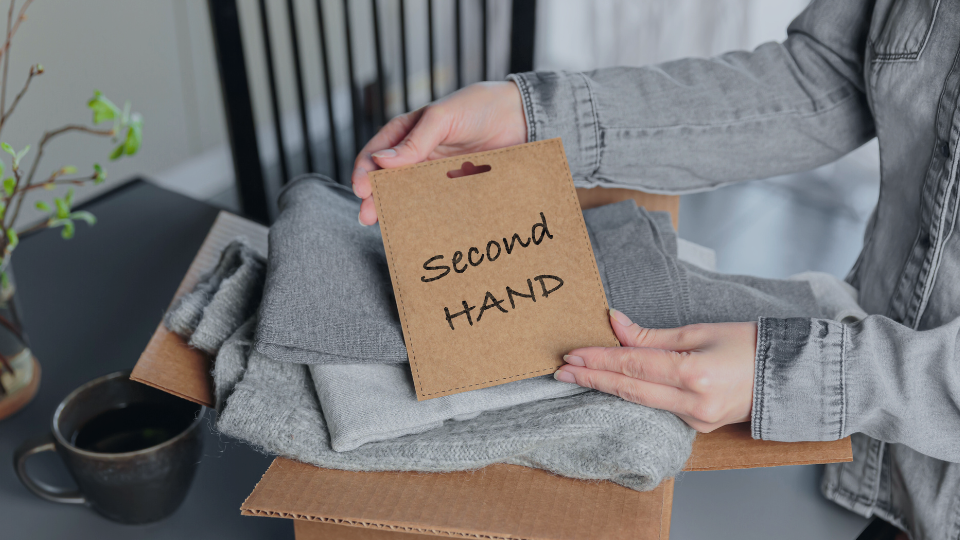
Second hand clothing cycle

Limited Transparency Across the Value Chain

Many brands have limited visibility into product lifecycles or second-life usage. This makes optimization and the development of long-term circular strategies more challenging.

Support Service Hotline

High Manual Service Effort

Information about spare parts, repairs or recycling is often provided manually. This approach can be costly, error-prone and difficult to scale efficiently.

POS product loyalty touchpoint

Low Customer Engagement After Purchase

Without accessible circular information, customer interaction often ends after the purchase. Opportunities for service, upgrades or long-term engagement remain untapped.

Free information material

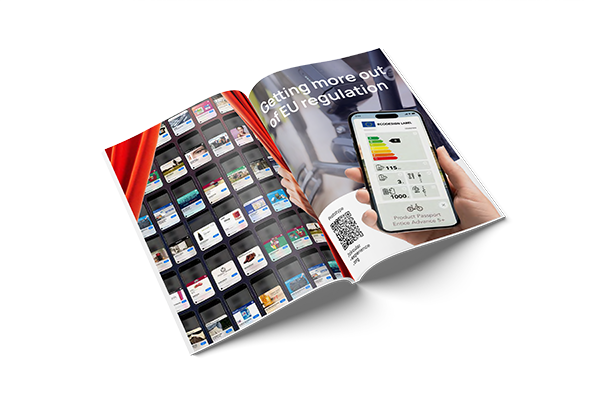
DPP Booklet

Our DPP booklet presents real-world use cases — including QR codes for interactive exploration, digital product passport examples and inspiration from leading brand projects.

DPP_Booklet_MockUp_150dpi
DPP Capabilities for Circular Economy & Second Lifee

The Digital Product Passport Makes The Circular Economy Tangible

With the Digital Product Passport, customers, service partners and retailers can access repair information, spare parts details and take-back options at any time. This supports more sustainable product use and structured circular processes.

Repair Guides & How-To Videos

Provide step-by-step instructions, video tutorials or interactive repair guides directly within the DPP. This enables customers to maintain or repair products and supports extended product lifecycles.

Spare Parts Information

Integrate structured information about compatible spare parts, including references or ordering options. This facilitates repair processes and supports second-life usage concepts.

Take-Back & Recycling Options

Communicate return channels, recycling locations or take-back programs directly within the DPP. Customers receive clear guidance for responsible product return and disposal.

Service Integration & Customer Support

Link repair information, spare parts and return processes with existing service workflows. The DPP can serve as a structured digital interface between customers and service teams, supporting more efficient communication processes.


COR_Tobias_Janorschke

Tobias Janorschke | Head of Digitalization and Process Management
COR seating furniture

COR

"The Digital Product Passport enables us to substantiate our sustainability efforts and further develop our business model toward circularity. We are able to integrate key processes — both compliance-related and customer-facing — directly into our products in a structured way. For us, this represents meaningful digital transformation, and we are proud to take a pioneering role within the furniture industry."

Individual furniture history

Material & origin transparency

Show customers what materials your furniture is made of and where it was produced. Transparency is increasingly becoming a selling point.

NV_Website-graphic-image-collection17_edited
Screenshot 2025-11-17 at 09.45.12

Furniture-specific support

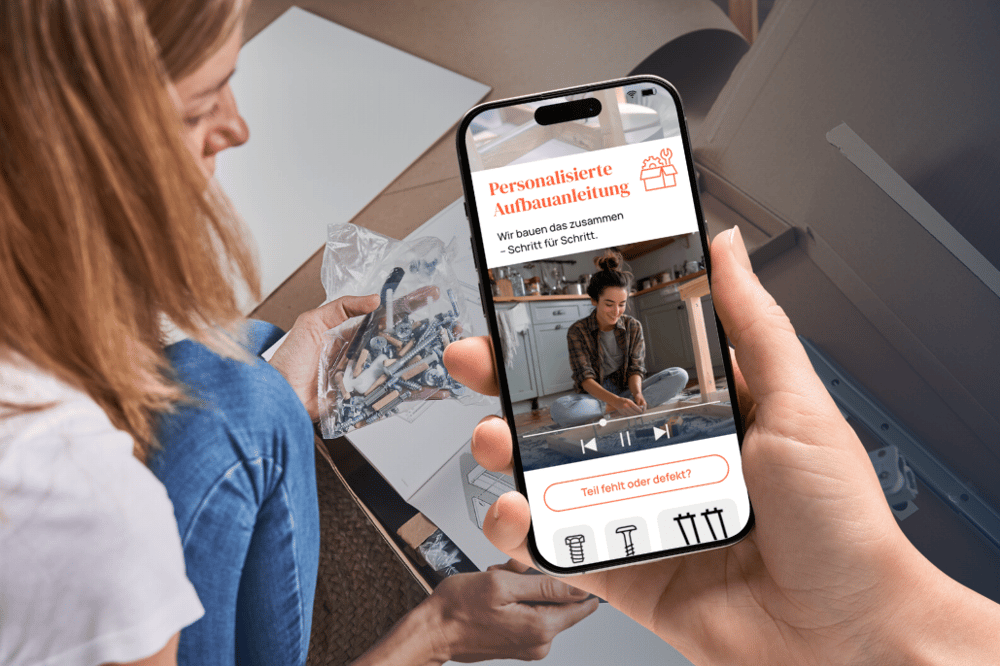
Assembly & care instructions

Customers receive assembly instructions, care instructions and how-to videos directly in the DPP. This reduces support costs and increases satisfaction.

Extend usage cycles

Repair service &
Second Life options

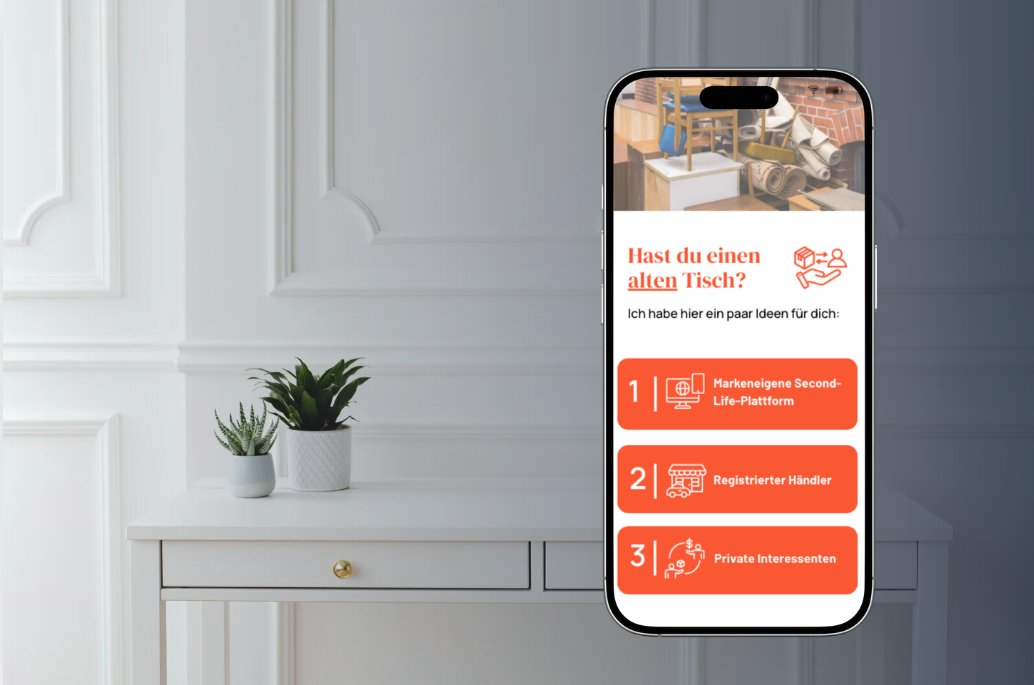
Offer take-back, repair or recycling directly via the DPP.
This strengthens sustainability and extends the customer life cycle.

Screenshot 2025-11-17 at 09.53.38
Turning the Product into a Digital Touchpoint

Scan. Understand. Buy.

Further use cases
 

More than Second Life – the Digital Product Passport unlocks additional value


The DPP goes beyond circular economy and second-life concepts. Discover how brands use it across marketing, service and sustainability initiatives — creating structured digital touchpoints and additional value for customers.

Frequently asked questions

FAQ - Digital Product Passport
For Sustainable Use And Second
Life

What circular economy information can be provided in the DPP?

The DPP enables the provision of repair guides, spare parts information, take-back options, recycling instructions and product lifecycle details directly at the product level.


How does the DPP support repair processes?

The Digital Product Passport provides customers with structured access to information relevant for repairs or maintenance, such as step-by-step guides, how-to videos and references to compatible spare parts.
At the same time, service teams can access centrally available product information, which can support more efficient handling of repair requests.

Can the DPP map take-back and recycling processes?

Yes. Return channels, recycling locations or reuse programs can be displayed within the DPP and made easily accessible to customers and partners.

How does the DPP contribute to extending the product lifecycle?

By providing repair information, spare parts references and structured return options, products can remain in use longer. This supports the practical implementation of second-life and circular economy strategies.

Can service teams use the DPP to support customers?

Yes. Service staff can access relevant product information in a centralized and structured way, helping to coordinate repair processes and respond to customer inquiries more efficiently.

Can the DPP be linked with sustainability and compliance data?

Yes. ESG-related data, recycling rates and certificates can be combined with second-life information within the DPP. This creates transparency and supports the structured provision of regulatory and sustainability-related documentation.


Narravero in Practice

Live Demo: Experience Circular Economy & Second Life

In our free live demo, we show how the Digital Product Passport can provide repair guidance, spare parts information, take-back options and recycling details directly at the product level.
Experience how Narravero enables the practical implementation of circular economy concepts — creating structured value for customers, service teams and brands alike.

Sales Team 2