Skip to content

Battery Passport Software for anyone who wants to beat the deadline

Every LMT battery, every industrial battery with a capacity exceeding 2 kWh, and every electric vehicle battery placed on the market or put into service on or after February 18, 2027, must have a battery passport. We compile the mandatory information specified in Annex XIII into a single data record for each battery, on the same platform where your Digital Product Pass will later operate.

Legal Basis Regulation (EU) 2023/1542 Art. 77, Annex XIII, Annex VI, Part C
Effective as of February 18, 2027 placed on the market or put into service
Who It Affects Who places the battery on the market not the company that supplies the cell
What You'll Need One data record per battery Publicly accessible and role-based, retrievable via QR code
200+ Business Customers
300 million DPP page views per month
12 Industries We Serve

Response within one business day

Request your demo

It takes 2 minutes. In the demo, we'll walk you through a battery example.

Free Non-binding No Sales Pitch
DIN EN ISO/IEC 27001:2024 CertifiedDIN EN ISO 9001:2015 CertifiedGDPR-compliant, EU hosting

Used in

B&W International Logo_Seine COR KEUCO Logo_STIHL Logo_OVIBELL

Regulation (EU) 2023/1542

The battery passport will become mandatory on February 18, 2027. What this means in practice

Chapter IX of the EU Battery Regulation specifies what data must be available for a battery and how it can be accessed. There are four key points you should be aware of before you start a project, each with the source from which it is taken.

01

Without a passport, the battery can't go to the market

Starting February 18, 2027, every LMT battery, every industrial battery with a capacity of more than 2 kWh, and every electric vehicle battery must have an electronic record. This requirement applies to both batteries placed on the market and those put into service. Batteries that were placed on the market prior to this date are not retroactively affected.

Art. 77, para. 1

02

The pass is accessed via the QR code on the battery

As of that same date, every battery will bear a QR code that can be used to access the passport. The code is linked to a unique identifier assigned by the economic operator, which must comply with ISO/IEC 15459 standards. The code must be visibly displayed, legible, and permanently affixed to the battery. It may be placed on the packaging or accompanying documentation only if the battery’s type and size do not permit it to be affixed to the battery itself.

Art. 13, paras. 6 and 7; Art. 77, para. 3; Annex VI, Part C

03

The information must remain up to date at all times

The economic operator placing the battery on the market must ensure that the information is accurate, complete, and up to date. The operator may authorize others in writing to act on its behalf. The performance of this obligation may be delegated, but the responsibility cannot.

Art. 77, para. 4

04

Second Life creates a new passport, not a copy

If a battery is prepared for reuse, repurposed, or remanufactured, it requires a new battery passport that is linked to the passport or passports of the original batteries. Responsibility is transferred to the party that places it back on the market or puts it back into service. The battery passport expires after recycling.

Art. 77, paras. 7 and 8

Two things we hear all the time

We'll get started once the delegated acts are in place

Then you’re starting late. The delegated act on the CO2 calculation methodology for electric vehicle batteries has not yet been adopted; the draft has been on the table since April 2024. The pass requirement does not depend on this: Article 77, Annex XIII, and the QR requirement have been in place since 2023. Anyone waiting for the CO2 regulation is waiting for something other than what takes effect on February 18, 2027.

We have time until the EU registry is up and running

The registry is now operational. The European Commission launched it on July 20, 2026. Anyone who places a battery on the market must upload its unique identifier to the registry. The legal basis is Article 77(10) of the Battery Regulation, which refers to the registry established under Article 13 of the Ecodesign Regulation. There is no separate battery passport registry.

From Two Legal Acts to a Single Database

Battery Passport

The Battery Regulation requires information on the battery: composition and critical raw materials, carbon footprint, performance and durability, due diligence requirements in the supply chain, circularity, and status. Effective February 18, 2027.

ESPR and Digital Product Passport

The Ecodesign Regulation raises the same types of questions for other product groups. The battery passport stems from a separate legal act, but it is the first product passport to become mandatory. Its unique identifier is entered into the same EU registry as all future product passports.

Two pieces of legislation, one registry, one product. Anyone who develops the battery passport as a standalone solution is laying the same foundation a second time. That’s exactly where we come in.

The Narravero Approach

One data record per battery, in which every change remains traceable

You maintain the model data once; data for individual batteries is continuously added from the connected systems. If the cell chemistry, supplier, or production site changes, a new version is created, and the previous versions are retained. If a battery is repurposed later, a new record is created with a link to its predecessor, as required by the regulation. The process begins with an initial battery family, not the entire portfolio.

Battery Data Set Version 3, released

IND-2291 Industrial Battery 12.4 kWh

Unique Identifier
in accordance with ISO/IEC 15459
Category
Industrial battery with a capacity of over 2 kWh
Data Categories
Annex XIII, Nos. 1 through 4
Supporting Documents
6, all valid
Status
unchanged
Public Pass via QR CodeMarket Surveillance and Notified BodiesLegitimate InterestIdentifier in the EU Registry
Illustrative example. Four information blocks in accordance with Annex XIII, organized into three access levels pursuant to Article 77(2).

Data Model

Each battery is assigned a unique identifier and a format that can be analyzed, rather than a PDF folder.

  • Unique ID and version number for each battery
  • Model data and individual battery data are tracked separately
  • Three access levels as specified in Article 77(2)
  • Status changes to "repurposed" or "refurbished" can be displayed

Data Access

Access is granted via the code on the battery throughout its entire life cycle, even when it is in the field with the customer.

  • QR code in accordance with Annex VI, Part C; identifier in accordance with ISO/IEC 15459
  • Role-Based Access by Recipient Group
  • Open Standards and GS1 Digital Link Instead of Vendor Lock-in
  • 300 million page views per month—tested in the field

Record-keeping

Your systems provide data via open, API-based interfaces, including from ERP and SAP environments.

  • Integration of BMS data sources, ERP, PLM, and QM
  • Test reports and certificates at the correct version
  • New required fields do not require the migration of existing records
  • Machine-Readable Export for Audits and Market Oversight

What needs to come together in the end

Identifier + Version Model Data Materials CO2 Data Performance Data Duty of Care Supporting Documents Status

If one link is missing, the chain is incomplete. Most projects fail not because of technical issues, but because of the question of which system is the reliable source for which field.

Division of Labor LCA studies and CO2 calculations, cell and transport testing (such as UN 38.3), due diligence audits, take-back systems, and legal consulting remain the responsibility of your testing laboratories, service providers, and consultants. We provide the database where their results are stored and remain accessible.

The quickest way to understand this is by looking at a battery from your own portfolio.

Request a demo

Product Proof

This is what a battery passport looks like when it's finished

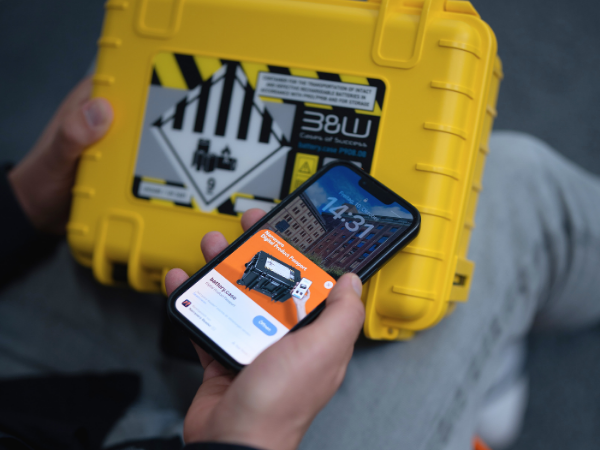
This is not a mockup, but an anonymized passport from the platform. Scan the code with your smartphone or open it in your browser. This is how market regulators, notified bodies, and individuals with a legitimate interest will access it later, each at the level of access they are authorized to have.

Touchpoint Battery Case
QR_Sample Battery Passport_VOLTERRA

Live, Anonymized Battery Passport

What you see here is the public level: accessible via the code on the battery, without an app or login. The restricted levels are behind this and are only displayed after authentication.

Open the sample battery passport

From the Field

SEINE Battery Systems: Starting Years Before the Deadline

SEINE Battery Systems began developing the digital battery passport in 2023. The catalyst was not the deadline, but rather the question of what could be achieved within their own processes using well-structured product data.

If done right, DPP quickly leads us to the most effective process optimization. And in the end, that translates into real money.
SEINE Saredin Seine Saredin Seine
Managing Director, SEINE Battery Systems · View Case Study

Battery Certificate and Product Data Sheet

Why Your Data Sheet Doesn't Replace the Battery Passport, Even If It Includes All the Values

In most companies, the information required by the regulation has long been available: in the data sheet, the test report, and the safety data sheet. The format is well-established and serves its purpose well. However, the Battery Regulation raises a different issue.

What a Data Sheet Is Designed For What the Battery Passport Requires
Reference Object What a Data Sheet Is Designed ForModel- or batch-specific. One document per type, valid for everything produced in that series. What the Battery Passport RequiresModel- and battery-specific. Annex XIII explicitly distinguishes between information regarding the battery model and data on individual batteries, including condition and status changes.
Result What a Data Sheet Is Designed ForA document. The end result is a PDF that a person reads. What the Battery Passport RequiresA data record. Machine-readable, accessible via the QR code on the battery, with tiered access for the public, market regulators, notified bodies, and individuals with a legitimate interest.
Cadence What a Data Sheet Is Designed ForIn the event of a product change, or, if in doubt, once per model generation. What the Battery Passport RequiresOngoing. The information must be accurate, complete, and up to date for as long as the battery remains in circulation. Repurposing creates a new record linked to the previous one; it expires only upon recycling.

The regulation says so itself

Annex XIII, in paragraph 4, requires data on individual batteries, not on the model: condition values, charge cycles, negative events, and the status as unchanged, repurposed, reused, remanufactured, or end-of-life. A document that applies to an entire series cannot capture this information.

Regulation (EU) 2023/1542, Annex XIII, No. 4, in conjunction with Article 77(2)

The question you should ask yourself

Will the database you're currently building for the Battery Passport also support the ESPR Digital Product Passport for your other products later on? If not, you'll be building the same foundation a second time—and this time under the same time pressure.


Common Questions Before Getting Started

Which batteries require a battery passport?

LMT batteries for light-duty vehicles, industrial batteries with a capacity of more than 2 kWh, and electric vehicle batteries that are placed on the market or put into service in the EU on or after February 18, 2027. The 2 kWh capacity threshold applies only to industrial batteries, not to LMT and EV batteries. Important for all others: portable batteries, starter batteries, and industrial batteries up to and including 2 kWh do not require a battery passport. However, as of the same date, they must bear a QR code that provides access to the required labeling information, the EU declaration of conformity, and information on end-of-life batteries (Art. 13, para. 6).

We just buy cells and assemble them. Are we even responsible for this?

Generally speaking, yes, if you place the finished battery on the market or put it into service yourself. The economic operator is responsible, not the company that supplies the cell. The economic operator must ensure that the information is accurate, complete, and up to date, and may authorize others in writing to act on its behalf. The implementation can thus be delegated, but the responsibility remains with you (Art. 77, para. 4). In cases of pure contract manufacturing or private-label arrangements, the role must be assessed on a case-by-case basis.

What about batteries that were already on the market?

The requirement applies to batteries placed on the market or put into service on or after February 18, 2027. For batteries placed on the market prior to that date, the regulation does not impose a retroactive requirement to provide a pass. Note regarding inventory: What matters is not the date of manufacture, but when the individual battery is actually placed on the market or put into service. Goods that were already made available on the EU market before the effective date must be treated differently from inventory still held by the manufacturer or importer.

The CO2 methodology isn't final yet. Should we wait?

No. The pending regulation concerns the calculation of the carbon footprint, not the pass requirement itself. That requirement takes effect on February 18, 2027, regardless of this. The data model is designed so that any future refinement will be treated as an expansion of an existing data domain and will not require a complete rebuild. Those who wait will, above all, lose time on data clarification—and experience shows that this is the real bottleneck.

What is DIN DKE SPEC 99100, and do we have to comply with it?

A DIN DKE SPEC from 2025, developed using the PAS process. It organizes the data attributes of the battery passport into seven clusters and thus serves as a useful working basis. However, it is neither a standard nor a pre-standard and does not establish a presumption of conformity. Annex XIII of the Regulation is mandatory. We use the SPEC as a guide, without confusing it with the law.

Is this a standalone Battery Passport software program, or is it part of your platform?

Part of the platform. Battery data is stored in the same data model as your other product data—not in a separate tool alongside it. In practice, this means: the same roles, the same interfaces, and one operating model instead of two.

How do our BMS, ERP, and QM data get into the Pass?

Through open, API-based interfaces, including those to ERP and SAP environments. Performance and status data from BMS sources, material and design data from ERP and PLM, as well as inspection reports from quality management, are consolidated into a single dataset and assigned to the correct version. The real effort lies not in the integration itself, but in determining which field from which system is the reliable source. We work with you to determine this.

What happens to the battery passport when it comes to Second Life and recycling?

If a battery is prepared for reuse, repurposed, or remanufactured, a new battery passport is created that is linked to the passport or passports of the original batteries. Responsibility passes to the party that places the battery back on the market or puts it back into service. After recycling, the battery passport expires (Art. 77, paras. 7 and 8). Therefore, a data model with version history and links is not merely a convenience but a requirement.

Can't find your question here? Talk to us directly →

Next Step

Check out what it looks like on the platform

The interview is conducted by someone who has read the regulation.

Learn About the Platform

Demo of the Narravero Platform

You'll see how required information, supporting documents, and access levels all come together in a real-world battery dataset. 30 minutes, live.

  • Data Records, Version Statuses, and Access Levels in the System
  • QR Code Access and Export for Audits and Market Surveillance
  • Assessment of Your Portfolio and Outstanding Items
Request a demo appointment

Clarify the questions first

Free Initial Consultation

A 30-minute session on required information, the timeline, and the next steps for your portfolio. No platform demo, no obligation.

  • Which of your batteries are affected
  • Realistic timeline through February 2027
  • Outstanding Issues Related to Regulation and Data Availability
Schedule an Initial Consultation
Mockup Teaser for White Papers_Battery_DE

Not quite ready yet?

The Battery Passport paper summarizes the mandatory information specified in Annex XIII, the timeline leading up to February 2027, and the initial implementation steps, including a practical example from the industry. Download the paper for free