·
12 minute read
Search for a Digital Product Passport example and you mostly get diagrams and sample data sets. What is missing are companies that actually have one attached to a product and can tell you what it delivered.
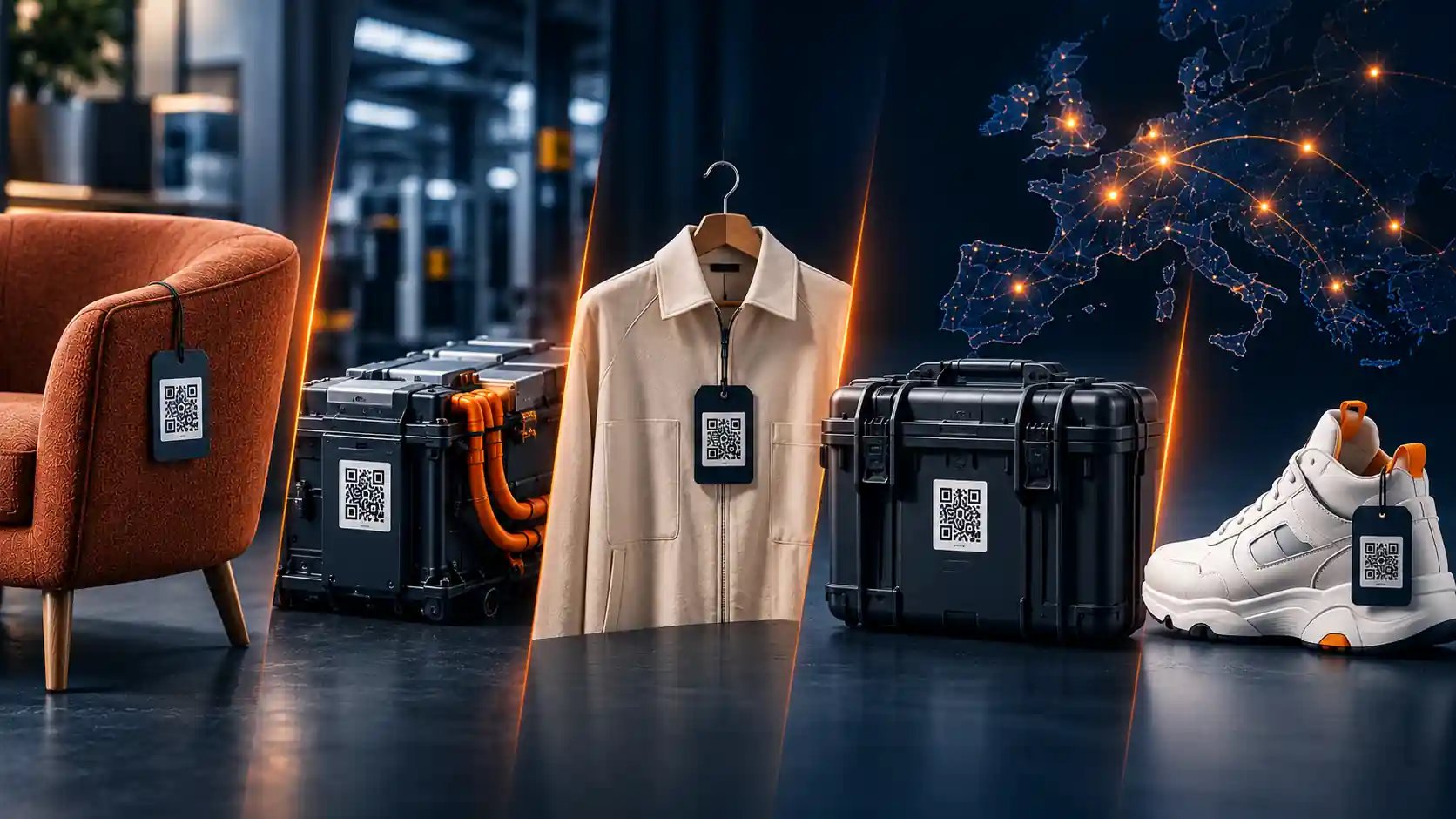
The five examples below are real. An upholstered furniture manufacturer that equipped more than 100 exhibits at a trade fair. A battery manufacturer turning the obligation that starts on into process optimisation. A case manufacturer that went paperless in quality assurance. A sportswear brand that uses it to spot counterfeits. And a furniture maker making its business model more circular.
One thing stands out: three of the five started without an immediately binding obligation. And four of the five passports can be opened right here, instead of only read about.
What a Digital Product Passport looks like in practice
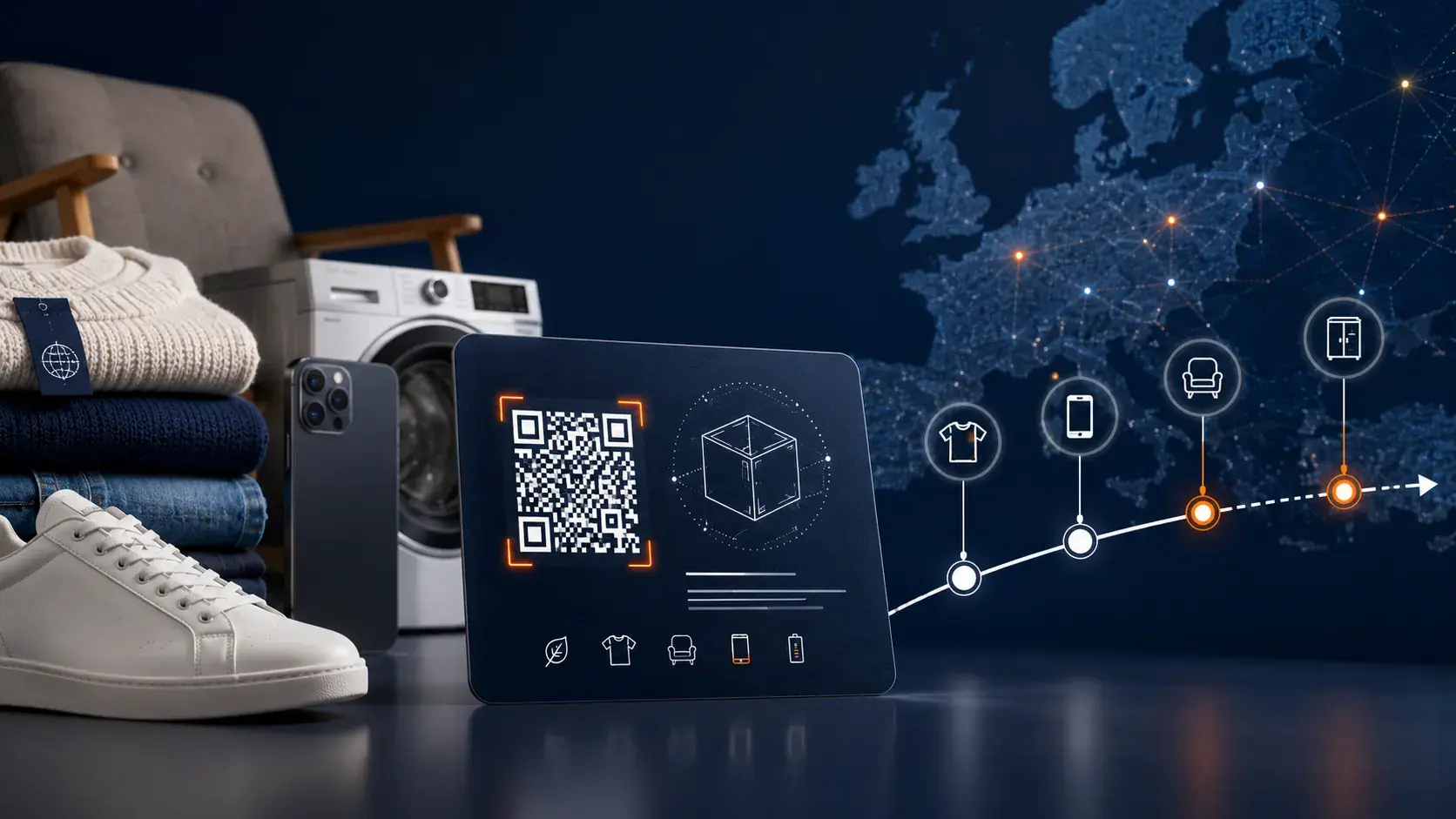
A Digital Product Passport is a digital data set permanently assigned to a physical product and retrieved through a machine-readable data carrier on that product. Whether it is kept for a model, a batch or an individual item is set by the relevant legal act. The legal basis is the Ecodesign Regulation, with the specific requirements per product group laid down in delegated acts. The European Commission adopted the working plan for implementing the ESPR on , and preparatory work for textiles and steel is already under way.
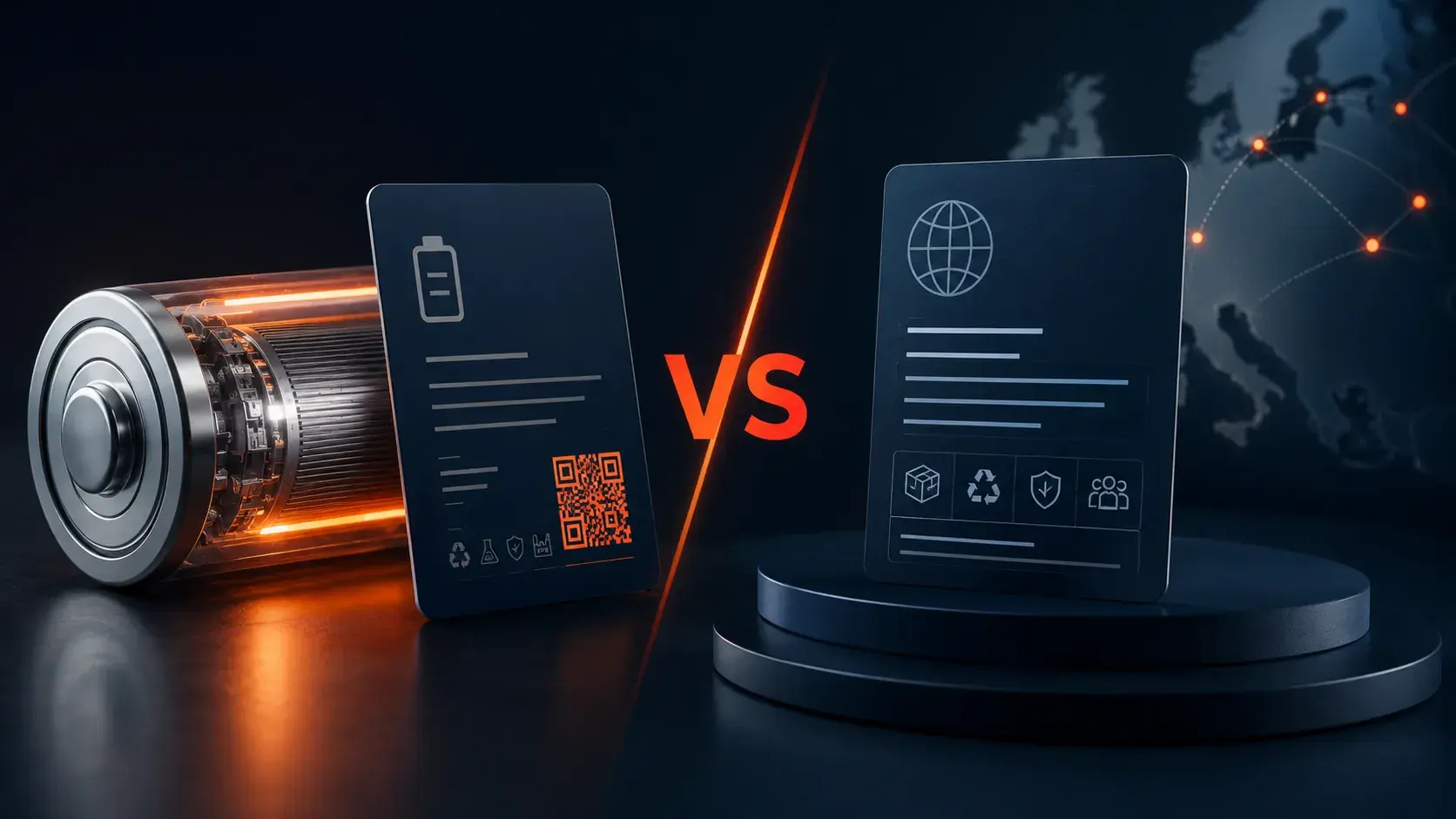
The Digital Battery Passport is a special case. It is the first mandatory form in the EU regulatory framework and has its own legal basis in the EU Battery Regulation (EU) 2023/1542, so it does not run through the Ecodesign Regulation.
That is the legal side. In practice, the character of a Digital Product Passport is decided by a different question: what happens when someone scans? That is exactly where the five examples diverge, which is why it is worth looking at them one by one instead of hunting for a template.
Key point: The legal basis defines the mandatory scope, the business value defines what a company puts into the Digital Product Passport beyond it.
Example 1: KOINOR, showing functions the showroom cannot
KOINOR builds configurable upholstered furniture. No delegated act covers upholstered furniture under the Ecodesign Regulation yet, so there was no immediately binding obligation. The company started anyway, driven by a concrete sales problem.
In the furniture store sits one exhibit showing a fraction of the possible configurations. Motorised adjustments, swivel and turn elements, legs, covers: everything not on the display floor has to be explained.
“Through the Digital Product Passport I can embed a video and show the customer what else is possible.”
Harald Riemer, Head of Marketing, KOINOR
The passport sits on the piece as an NFC tag. Hold your phone against it and you are in. No app download, no website navigation.
“The advantage of the Digital Product Passport with an NFC tag is simply that everyone has their phone with them and can scan straight away. Without having to install an app, without having to go to a website.”
Christian Wachter, Head of IT, KOINOR
Inside the Digital Product Passport sit function videos, configurable product details, a hand-off into the 3D configurator and after-sales content such as user manuals. The contract was signed at the end of 2025, the project started in January 2026 and went live in April 2026 at the Salone del Mobile in Milan, with more than 100 exhibits equipped. Not a pilot on three sofas, but full coverage at the most important trade fair in the sector.
The second project came directly out of feedback from the first. From May to July 2026 a further deployment ran in a European furniture store, and a rollout across the entire product programme is planned by the end of 2026.
Read the full KOINOR case study →
Key point: Started without a binding obligation, live in four months, more than 100 exhibits. The business case arrived before the regulation.
Example 2: COR, proving sustainability instead of claiming it
COR Sitzmöbel has been producing in Rheda-Wiedenbrück since 1954. The starting position was typical for an established mid-sized manufacturer: product information, material origins and take-back scenarios sat in different systems with no end-to-end digital connection.
The decisive call in the project was not to build the passport as an isolated tool. The mandatory data fields were mapped onto the existing ERP, so the data is pulled straight from there. That sounds like a detail, but it decides whether a Digital Product Passport stays maintained in daily operations or goes stale within six months.
Inside the Digital Product Passport sit material composition and origin, environmental certifications such as the Blue Angel, care instructions, take-back scenarios, recycling information and service offers, for instance care products matched to the specific configuration. Access again runs through NFC on the piece.
“The Digital Product Passport allows us to demonstrate genuine sustainability and make our business model more circular.”
Tobias Janorschke, Head of Digitalization and Process Management, COR Sitzmöbel
The organisational side is the notable part. COR ran a kick-off, a plant visit, wireframe workshops and weekly alignment with the ERP team and partners. What we keep seeing with customers is that this part decides internal acceptance, not the technology. Bring production in only at go-live and you have a data problem and a morale problem at the same time.
Open the Digital Product Passport →Read the full COR case study →
Key point: The Digital Product Passport pulls its data straight from the ERP. That keeps it current without anyone maintaining it twice.
Example 3: SEINE Battery Systems, obligation as a process lever
SEINE Battery Systems has a deadline. Under the EU Battery Regulation, the Digital Battery Passport becomes mandatory for certain battery categories from . The company could have waited. It chose early integration instead, with a clear argument.
“If done right, the DPP leads to the most effective process optimization, and that translates into real financial value.”
Saredin Seine, Managing Director, SEINE Battery Systems
Every battery receives a unique digital identity during pack and module assembly, through a QR or NFC code. Production, test and quality data flow automatically into the Digital Battery Passport, connected through standardised connectors to ERP, MES, PLM and QMS as well as supplier data. What gets captured includes material composition, carbon footprint, safety and recycling parameters.
Worth separating clearly: the obligation to hold a passport from 2027 and the individual data obligations are two different things. Items such as the carbon footprint or due diligence reporting only bite once the specific requirement applies to that battery category, and parts of it still depend on secondary legislation. Conflate the two and you plan against the wrong date.
Access is role-based. End customers, service, partners and authorities each see a different slice, stored in an audit-proof way with a full audit trail. In practice that delivers a service history that is 100% digital and tied to the product, faster evidence for authorities and logistics, an end to manual documentation, and the data foundation for take-back, remanufacturing and second-life offers.
Open the Digital Battery Passport →Read the full SEINE case study →
Key point: Capturing data in production costs almost nothing. Reconstructing it in 2027 gets expensive.
Example 4: B&W International, paperless quality assurance
B&W International builds high-quality cases and protective systems. Quality assurance partly still ran on paper, inspection and service information was spread across several systems, and identifying the individual item behind a complaint took time.
The Digital Product Passport solves two things at once here. Internally, digital inspection checklists cover tightness, hinge function and interior fit-out, with photos, measured values and inspection notes, all linked to the serial number. Externally, an NFC or QR tag on the product leads straight to exploded views, spare part lists and service forms, with automatic product matching and a connection into CRM and ERP.
“We value the DPP because it allows us to provide customers with detailed product information.”
Dirk Uhlenbrock, Managing Director, B&W International
The result is full traceability across production, inspection and service, markedly less manual work on complaints, and a spare parts process that no longer runs on email ping-pong. This example is interesting because the value here is mostly internal. End customer access is a side effect, not the driver.
Open the Digital Product Passport →Read the full B&W case study →
Key point: The Digital Product Passport pays off even if not a single end customer ever scans it.
Example 5: DSSLR, authenticity and community at the product
DSSLR is a sport and lifestyle brand founded in 2023 by Christoph A. Dassler. Limited collections, according to the brand using up to 95% recycled materials and organic cotton. And with that, a counterfeiting risk that grows with every drop.
Here the Digital Product Passport takes on a role the regulation never envisaged: authentication. Every product carries what DSSLR describes as a high-security NFC tag with certified signature verification. Scan it and you get a reliable authenticity confirmation, plus serial number, collection, material composition, production batch and origin.
“When customers scan our product, they know: It's authentic. At the same time, the DPP grants access to exclusive content while staying fully compatible with our retail systems. It's simply brilliant.”
Christoph A. Dassler, Founder and Managing Director, DSSLR
The second part is the more interesting one. The scan automatically triggers community onboarding, with exclusive content and gamification elements. For a brand with no stationary retail of its own, that is a direct line to whoever actually wears the product, regardless of which retailer sold it. The connection into existing point-of-sale and retail systems runs through GS1 Digital Link. For companies in the textile and fashion industry this is usually the deciding point, because without retail system compatibility any solution stops at the till.
Open the Digital Product Passport →Read the full DSSLR case study →
Key point: At DSSLR the Digital Product Passport is the most direct channel to whoever wears the product, whatever the sales route.
What the five examples have in common
A sofa, an industrial battery, a protective case and a hoodie have little in common as products. In the implementation, the same patterns keep repeating.
| Company | Sector | Trigger | Core value |
|---|---|---|---|
| KOINOR | Upholstered furniture | No binding obligation, sales value | Showing functions the showroom cannot display |
| COR | Furniture | No binding obligation, sustainability strategy | Provable sustainability, take-back and recycling |
| SEINE Battery Systems | Battery and energy storage | EU Battery Regulation, 2027 | Process optimisation, service history, second life |
| B&W International | Protective cases and plastics | No binding obligation, internal efficiency | Paperless quality assurance, spare parts channel |
| DSSLR | Sportswear | Counterfeit protection, brand loyalty | Authentication, community access at the product |
Three observations follow from that. First, in three of five cases the trigger was not a binding obligation. Second, the real effort in all five projects sat in pulling scattered product data together, not in the technology on the product. And third, in none of the examples does the Digital Product Passport end up as a compliance document. In each case it becomes the thing the company needed anyway.
If you want to know whether your portfolio is affected at all, the overview of product groups covered by the DPP helps. For the wider topic there is the main page on the Digital Product Passport.
Key point: In three of five cases no binding obligation was the trigger, but a problem the Digital Product Passport solves anyway.
How to get to your own example in five steps
The most common mistake is waiting for the delegated act. It sharpens the work, it does not replace it. You can take the following five decisions without a final act, and every one of them comes before the question of which system you use.
- Assess exposure before anything else Work out which product groups are likely to be covered, and from when. Whichever product generates the most questions is a fair argument for sequencing, but it does not replace the exposure assessment.
- Define the target picture and the granularity before anything gets printed Decide what someone should see when they open the passport, and whether it sits at model, batch or item level. You can add content later, but you cannot change the level.
- Name an owner with a mandate across functions The Digital Product Passport touches legal, product, IT, production, sustainability and marketing at the same time. Without a mandate and backing from the leadership team, the programme stalls in alignment meetings.
- Take stock of your data sources before you integrate For every piece of information you need, note what exists, where it sits and who maintains it. Start with the data you already have and make the gaps visible rather than waiting for completeness.
- Plan backwards from production lead time, not from the deadline Plan against the production start of the affected batch rather than the date in the regulation, because data carriers, inspection steps and supplier alignment have to be settled months in advance. The legal obligation itself attaches when the product is placed on the market.
For a first product group, six months from the exposure assessment to go-live is a realistic frame, provided ownership is settled and you start with the data you already have. KOINOR managed it in four, although without regulatory data obligations to carry. For the phases in detail, the roles involved and the four pitfalls that cost the most lead time, see Implementing a Digital Product Passport: where to start.
Key point: You can add content later, but not the granularity and not the production lead time.
Digital Product Passports in numbers
18.02.2027
deadline for the Digital Battery Passport under the EU Battery Regulation (EUR-Lex, Regulation (EU) 2023/1542)
16.04.2025
adoption of the ESPR working plan 2025 to 2030 (European Commission)
19.07.2026
the ban on destroying unsold clothing and footwear has applied since this date (European Commission)
100+
exhibits with a Digital Product Passport at the KOINOR go-live at the Salone del Mobile
4 months
from signing to market launch at KOINOR
200+
corporate customers across 12 sectors use the Narravero platform
Key point: The deadlines are fixed, and the first companies are already delivering instead of waiting for the delegated act.
Implementing with Narravero
Narravero runs an end-to-end DPP platform. All five examples in this article run on it. More than 200 corporate customers across 12 sectors use the platform, it handles 300 million platform accesses per month, hosted in the EU and GDPR compliant.
What separates the five projects is not the technology on the product, but the data connection behind it. At COR that ran through a mapping onto existing ERP fields, at SEINE Battery Systems through connectors into ERP, MES, PLM and QMS. This infrastructure is reusable across product groups, but not automatically transferable: data models, roles and evidence have to be adapted per product group.
Thomas Rödding, founder and CEO of Narravero, is personally involved as Co-Chair of CEN-CENELEC JTC 24 and as Vice Chairman at DIN, the bodies shaping the technical framework for the Digital Product Passport in Europe. That involvement gives him a precise understanding of how data models for different product groups are intended to work in regulatory terms.
Start the DPP Readiness Check →
Key point: The platform is the same in all five cases. What differs is which systems hang off it.
Frequently asked questions about Digital Product Passport examples
Are there real examples of the Digital Product Passport already?
Yes, several companies run the Digital Product Passport in day-to-day business today, among them KOINOR and COR in furniture, SEINE Battery Systems in energy storage, B&W International in protective cases and DSSLR in sportswear.
What does a Digital Product Passport for furniture look like?
For furniture, the Digital Product Passport typically holds material details, care instructions, user manuals, videos covering functions and variants, plus take-back and recycling information, all reachable through an NFC tag on the piece itself.
Which technology sits behind these examples, QR code or NFC?
Both appear in practice, because the Ecodesign Regulation prescribes a machine-readable data carrier rather than a specific technology. NFC suits products you hold in your hand or stand in front of, while QR codes are cheaper and work from a distance.
What goes into a Digital Product Passport?
The mandatory scope follows the delegated act for your product group and usually covers identification, material composition, sustainability and recycling information. Many manufacturers add voluntary content on top, such as manuals, spare part lists, service forms or videos.
Do I have to wait for the delegated act covering my product group?
No, and three of the five examples in this article started without an immediately binding obligation. If you begin only once the act lands, you build the same data foundation under time pressure that you could have built calmly beforehand.
How long does it take to introduce a Digital Product Passport?
That depends on scope. KOINOR went live four months after signing with more than 100 exhibits, whereas a fully regulated Digital Battery Passport wired into production, as at SEINE Battery Systems, runs through several expansion stages.
Does every single product need its own Digital Product Passport?
That depends on the product group, because the relevant legal act sets whether the passport sits at model, batch or item level. Item level is required for certain batteries, which is why every battery at SEINE Battery Systems receives its own digital identity during pack and module assembly.
How is a Digital Product Passport different from a product page in a shop?
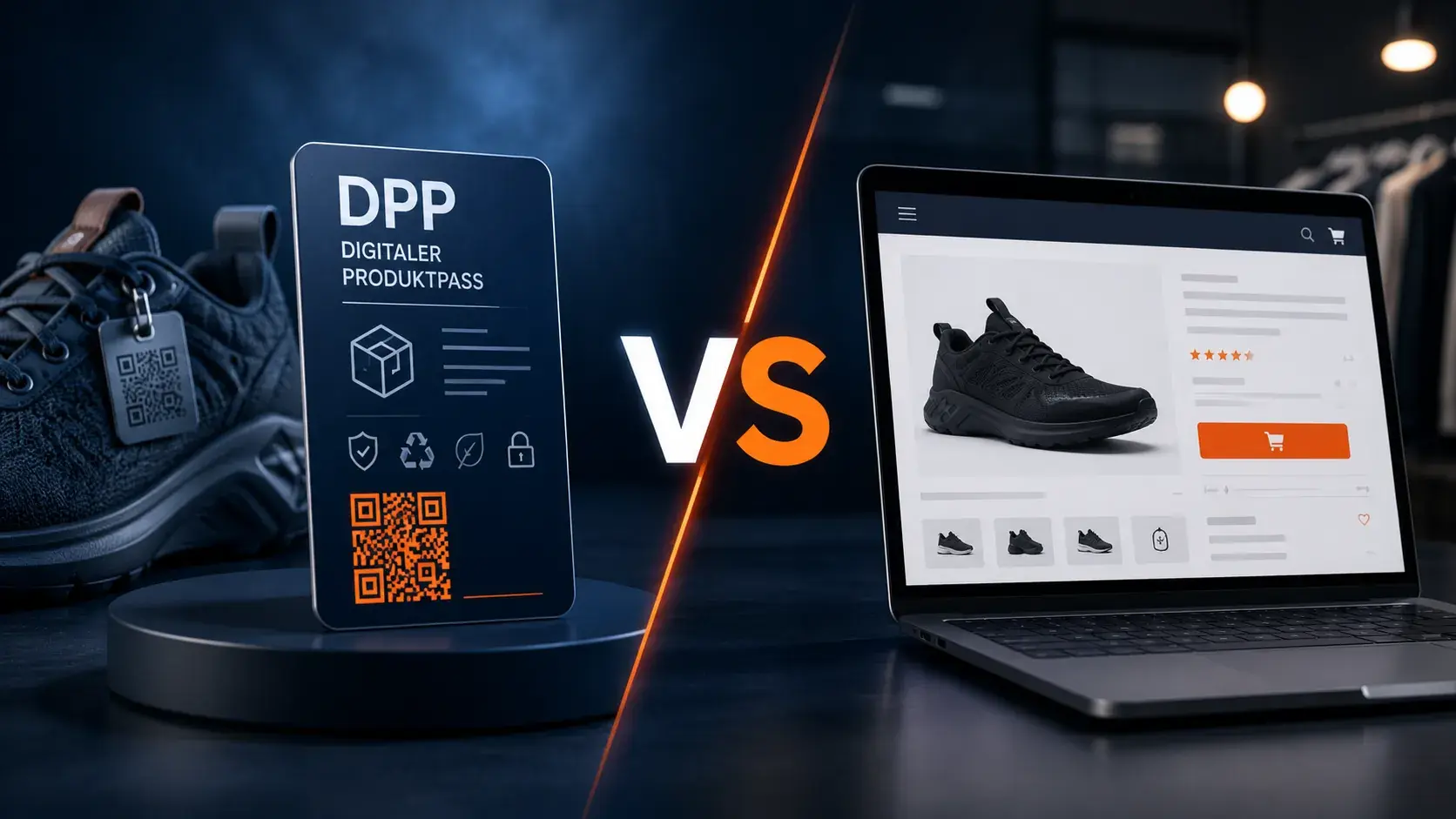
A product page describes a model and ends at the point of sale, while the Digital Product Passport sits at the level the legal act prescribes and keeps living across the whole period of use, including service, repair, resale and recycling.
What does an example in the battery sector look like?
SEINE Battery Systems captures production, test and quality data automatically from ERP, MES, PLM and QMS and feeds it into the Digital Battery Passport, with role-based views for end customers, service, partners and authorities.
What does a Digital Product Passport cost?
Cost depends on the number of products, the number of data sources and how deep the integration goes. The pricing overview from Narravero gives you a first frame based on portfolio size and integration needs.